
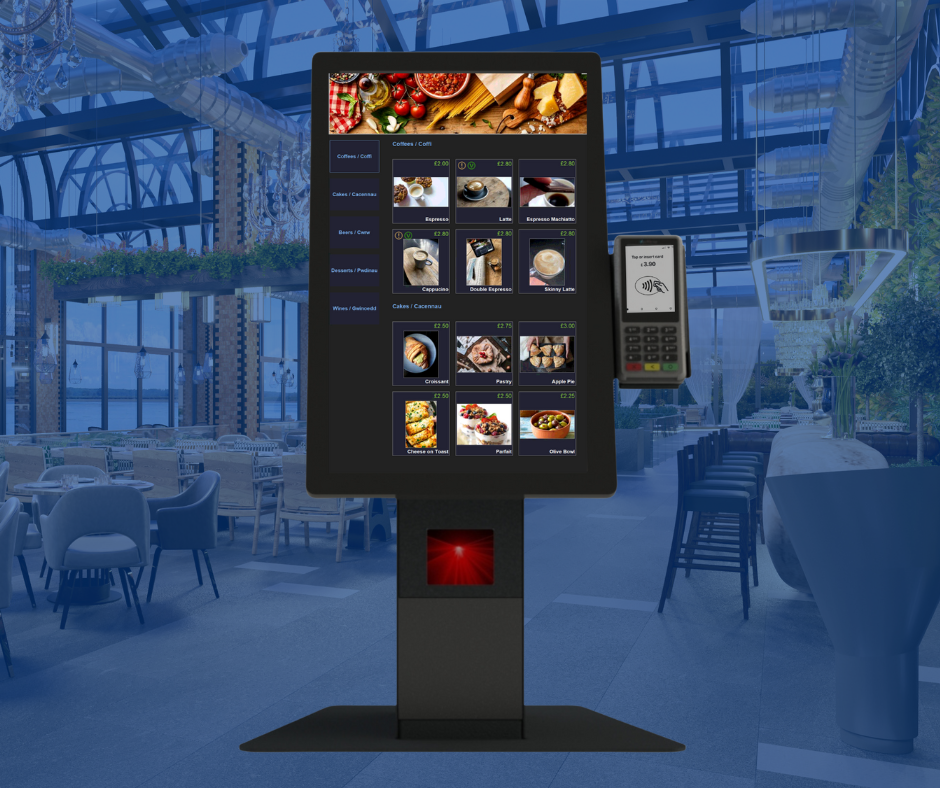
Across the UK, self-ordering kiosks have moved from being a novelty to becoming a practical part of everyday food service operations. From bustling university cafeterias to high street cafés and quick service restaurants (QSRs), businesses are embracing kiosk technology to improve customer experience, increase efficiency and streamline operations.
For higher education institutions in particular, where peak service periods can create significant pressure on staff and facilities, self-service ordering is proving to be more than just a convenience — it is becoming a strategic investment.
Meeting the Expectations of Modern Customers
Today’s customers are accustomed to digital convenience. Whether they are booking travel, shopping online or paying with a mobile wallet, people increasingly expect fast, intuitive and self-directed experiences.
Students, especially, are highly digitally fluent. In university and college dining environments, self-order kiosks align naturally with how students already interact with technology. They want speed, flexibility and minimal friction when ordering food between lectures or during busy lunch periods.
Similarly, customers in cafés and QSR environments often value convenience above all else. A kiosk allows them to browse menus at their own pace, customise their order and complete payment quickly without feeling rushed.
The result is a smoother, more satisfying customer journey.
Reducing Queues During Peak Times
One of the most immediate and visible benefits of self-ordering kiosks is queue reduction.
Higher education cafeterias frequently experience intense surges in demand within short time windows. Hundreds of students may arrive within minutes between classes, creating long queues and placing pressure on service staff.
Self-order kiosks help distribute demand more efficiently by allowing multiple customers to order simultaneously. Rather than relying solely on a traditional till setup, institutions can increase ordering capacity without significantly expanding floor space or staffing levels.
For QSRs and cafés, this can be equally valuable during breakfast rushes, lunchtime peaks and weekend trading periods. Faster ordering means quicker throughput, helping businesses serve more customers without compromising service quality.
Grab & Go
An additional advantage of self-ordering kiosks is their ability to support and promote grab-and-go food and drink options. In both higher education cafeterias and busy cafés or quick service restaurants, many customers are looking for the fastest possible route from selection to collection.
Kiosks can present dedicated grab-and-go menus featuring pre-prepared sandwiches, salads, snacks and beverages that are ready for immediate collection. This not only speeds up service during peak periods but also helps operators showcase products that might otherwise be overlooked. For universities, where students often have limited time between lectures, grab-and-go ordering provides a convenient solution that fits around busy schedules.
For cafés and QSRs, it can increase throughput, reduce queue times and encourage impulse purchases, creating a more efficient service model while enhancing the overall customer experience.
Improving Order Accuracy
Miscommunication at the till can lead to incorrect orders, wasted food and dissatisfied customers. Kiosks significantly reduce this risk.
Customers input their own selections directly, including modifiers such as:
- Milk alternatives
- Dietary preferences
- Portion sizes
- Add-ons and extras
- Allergen-related requests
In university settings, where dietary diversity is increasingly important, this level of clarity can greatly improve the customer experience. Students with allergies, vegan diets or religious dietary requirements often appreciate being able to review ingredients and options carefully before placing an order.
For operators, fewer order errors mean reduced waste, improved efficiency and greater customer satisfaction.
Encouraging Higher Spend Per Transaction
Interestingly, self-order kiosks often increase average order value.
Unlike face-to-face ordering, kiosks consistently present upsell opportunities without placing pressure on the customer. Suggested extras, meal upgrades and promotional bundles can be displayed naturally throughout the ordering journey.
Customers may be more inclined to add:
- A drink
- A snack
- A dessert
- Premium ingredients
- Meal upgrades
In both university cafeterias and QSR environments, even modest increases in average spend can have a substantial impact over time.
Supporting Staff Rather Than Replacing Them
There is sometimes a misconception that kiosks exist purely to reduce staffing. In reality, many operators use them to redeploy staff more effectively.
Rather than spending the majority of their shift taking orders, employees can focus on:
- Food preparation
- Customer assistance
- Cleaning and hygiene
- Speed of fulfilment
- Hospitality and customer care
In higher education settings, this can improve the overall atmosphere of a cafeteria by allowing staff to engage more positively with students instead of being tied to transactional interactions.
Given ongoing labour challenges across the UK hospitality sector, kiosks can also help businesses maintain service standards during recruitment shortages.
Enhancing the Student Experience
Universities and colleges increasingly compete on overall student experience, not simply academic provision.
Modern, technology-enabled dining environments contribute to a campus experience that feels efficient, contemporary and student-focused.
Self-order kiosks can also integrate with:
- Student payment systems
- Campus cards
- Loyalty schemes
- Mobile ordering platforms
- Nutritional information databases
For institutions seeking to modernise campus services, kiosks represent a visible and practical improvement that students use every day.
Valuable Operational Insights
Digital ordering systems generate useful data that can support better decision-making.
Operators can gain insight into:
- Best-selling menu items
- Peak ordering periods
- Customer preferences
- Seasonal trends
- Popular add-ons
- Underperforming products
This information can help cafeteria managers and restaurant operators optimise menus, staffing schedules and promotional campaigns.
In higher education environments, where budgets and operational efficiency are often under scrutiny, access to reliable data can support smarter resource planning.
Accessibility and Inclusivity Benefits
Well-designed kiosk systems can also improve accessibility.
Features such as:
- Multiple language options
- Adjustable text sizes
- Clear allergen information
- Contactless payment
- Intuitive navigation
can make ordering easier for a wider range of customers.
For universities with international student populations, multilingual capabilities can be particularly beneficial.
Future-Proofing Food Service Operations
The UK hospitality and education sectors continue to evolve rapidly. Customers increasingly expect seamless digital experiences, while operators face pressure to improve efficiency and manage costs.
Self-ordering kiosks offer a practical solution that addresses both sides of the equation:
- Faster service for customers
- Improved operational efficiency for businesses
- Better data visibility
- Increased revenue opportunities
- Reduced pressure during peak periods
For higher education cafeterias, cafés and quick service restaurants alike, kiosk technology is no longer simply an innovation — it is becoming an expected part of modern food service.
Self-ordering kiosks are reshaping how food service environments operate across the UK. In higher education settings, they help institutions serve large student populations more efficiently while improving the overall campus experience. In cafés and QSRs, they support faster service, higher transaction values and more streamlined operations.
When implemented thoughtfully, kiosks do not remove the human element from hospitality. Instead, they free staff to focus on delivering better service where it matters most.
As customer expectations continue to evolve, businesses and institutions that embrace self-service technology are likely to be better positioned for long-term success.